YouCine

Sisu 2: Road to Revenge: the vengeance of Aatami Korpi

Sisu 2: Road to Revenge: the vengeance of Aatami Korpi

“Sisu 2: Road to Revenge” arrives in 2025 as the long-awaited continuation of the action cult that began with “Sisu” (2022), promising to amplify everything that made the original such a success among fans of intense and merciless films. Expectations were high — and director Jalmari Helander responds with a film that honors the raw and visceral tone of the first one, but dares to go further: more action, more chases, more stylized violence, unafraid to shock or to surprise. From the very first minutes, we understand that we are facing something bigger: the protagonist returns, as always, a man of few words but actions that speak for themselves. The film already establishes its tone of revenge, pain, struggle, and redemption — and only escalates from there. The post-war setting, the tense atmosphere, and the mission driving the hero give the film a different dramatic weight, even amid explosions and carnage. For those seeking more than just bullets and explosions, “Sisu: Road to Revenge” delivers a human motivation for violence: restoring what was lost, rebuilding, rescuing a destroyed past. This adds depth, even as the film embraces exaggeration and spectacle. A story that will move you “Sisu 2: Road to Revenge” resumes the journey of Aatami Korpi after the end of the war. The war is over, but the pain and consequences remain. The house where his family lived, massacred during the war, is now in Soviet territory — and Aatami decides, with his own hands, to dismantle it plank by plank, as if he were carrying not just wood, but memories, pain, and longing. He loads everything onto a truck, determined to rebuild his home on safe soil, far from terror. However, peace will not be allowed: the man who killed his family returns — the ruthless Red Army officer Igor Draganov — determined to finish the job. From that moment on, the film becomes a brutal chase at a frantic pace, with stages that escalate in intensity and violence. First come the soldiers on foot, then motorcycles, planes, trains, and tanks — a climb into complete chaos and destruction. The director divides the film into “chapters” marked by title cards, a narrative choice that helps maintain rhythm and organize the rising tension and action. Each set-piece tries to surpass the previous one, whether in chases, escapes, or hand-to-hand battles. The fluidity and energy of the direction, combined with editing and elaborate action choreography, make this film a nonstop spectacle — almost like a continuous cinematic delirium. Despite the brutality and frenetic rhythm, the film never loses its sense of spectacle: there are moments of dark humor, almost cartoonish exaggeration — gunshots, explosions, graphic violence, and even physically absurd scenes, but all displayed with such visual confidence that the viewer simply accepts them without questioning the logic. Attention never drifts: from beginning to end, “Sisu: Road to Revenge” keeps the audience tense, excited, and often open-mouthed. In the end, the plot — simple at its core — serves as the foundation for a narrative of survival, revenge, and rebuilding; but it is the relentless rhythm, the creative set-pieces, and the visual energy that guarantee the impact. Everything works extremely well for those seeking an intense, breathless experience. A cast of stars that will surprise you At the center of everything is Aatami Korpi, once again played by Jorma Tommila. With few lines — the character speaks more through actions than words — he is the epitome of a silent and relentless hero. Tommila delivers an impressive physical performance, carrying not only the weight of the plot but also the emotional narrative of loss, pain, and determination to rebuild. His commitment gives credibility even to the most absurd moments of violence. The antagonist, Igor Draganov, played by Stephen Lang, brings the perfect opposing force — cold, cruel, and remorseless. Draganov is not just an enemy to be defeated: he represents concrete evil, merciless revenge, and the trauma that haunts Aatami. Lang’s presence elevates the film, as he needs very little to generate tension: an intense stare, a firm voice, an imposing posture are enough. Also in the cast is Richard Brake, as a KGB agent who intensifies the chase — a presence that expands the reach of the threat. Even though his role is secondary, he contributes to the sense of oppression and danger, reinforcing the idea that Aatami is being hunted by forces far greater than himself. The ensemble works well because it doesn’t try to turn the film into a heavy drama, but uses strong performances to legitimize the stylized violence — a delicate balance: the audience understands that this universe requires brutality and accepts the suspension of disbelief. The actors play their parts with conviction, creating an intense environment consistent with the tone of the film. Comparisons and references: recalling classics and hits As soon as you watch “Sisu 2: Road to Revenge,” it’s hard not to notice echoes of great action and chase films. The structure of continuous pursuit and the escalating chaos throughout the narrative are reminiscent of works like “Mad Max: Fury Road” — with roads, dust, stylized violence, and pure adrenaline. There is also the spirit of old lone-hero films, where characters traversed hostile territories armed with courage, instinct, and physical strength. The declared influences of classic adventure films and physical-timing comedy show that Helander sought to balance brutality with spectacle, creating a hybrid film that moves between action, dark humor, and exaggerated adventure. Compared to the first “Sisu,” the sequel expands its ambition: more enemies, more vehicles, more chaos, more visual creativity. The new film fully embraces the idea of constant escalation, always trying to raise the intensity of the next scene. For fans of the first movie, it is an evolution that delivers exactly what is expected and more. Download YouCine and watch Sisu 2 online “Sisu: Road to Revenge” is a film that demands total immersion from the viewer. It does not seek realism nor tries to soften its … Read more
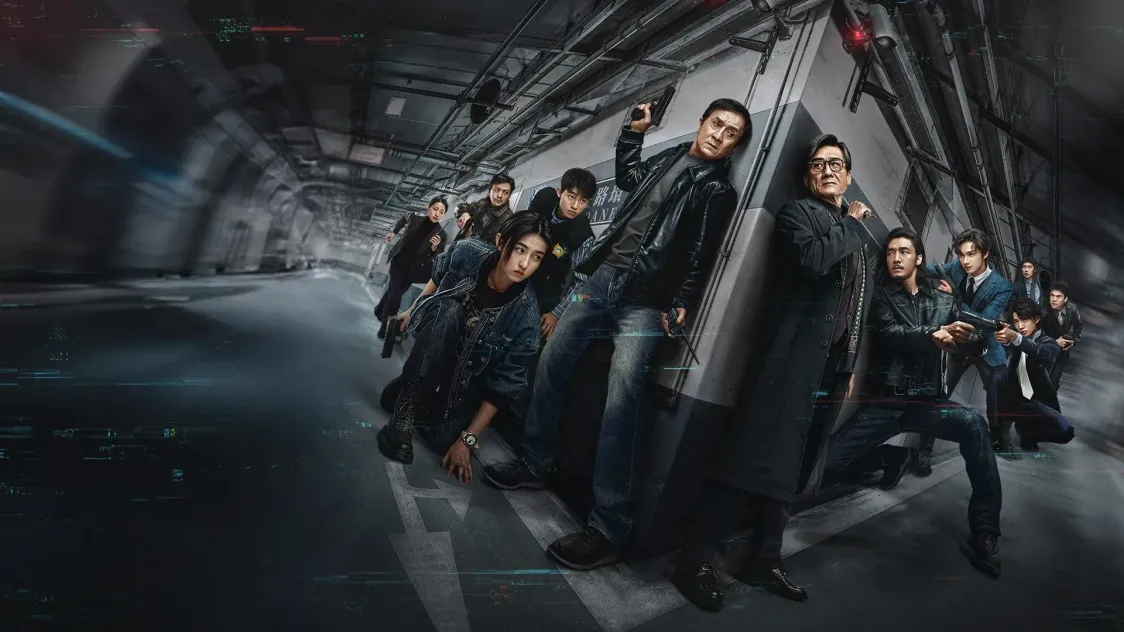
Watch The Shadow’s Edge with Jackie Chan on YouCine

Watch The Shadow's Edge with Jackie Chan on YouCine

In The Shadow’s Edge, the viewer is taken into an almost palpable atmosphere of tension: we see a world where surveillance technology, as modern as it is relentless, is manipulated by brilliant criminals. It is in this scenario that Wong Tak-chong (Jackie Chan) appears, a former tracking specialist who seems to have left his investigative life behind — until he is called back for a dangerous mission. The setting opens with a calculated, quiet, but inevitably explosive tone: the technological threat is real, and the Macau police realize they need someone with experience to counter the power of the system. Next, we immediately sense that this is not just a conventional action film. The tension comes less from acrobatic fights (at least in the beginning) and more from observation, planning, and strategy — the use of cameras, drones, and real-time monitoring creates a modern espionage atmosphere. The way the film balances investigative scenes with subtler actions in its first minutes suggests that director Larry Yang wants to explore more of the intelligence game than simply show off fistfights. And even so, when the action finally erupts, it has weight. These aren’t gratuitous blows: every movement seems purposeful, every confrontation carries meaning. The promise of a thriller where the old guard of surveillance clashes with the technological generation is quickly reinforced, preparing the audience for a journey of mystery, betrayal, and cerebral analysis. These first impressions indicate that The Shadow’s Edge has ambition — and is apparently up to the challenge. A game of intelligence and a frenetic pace At the core of The Shadow’s Edge is a crime scheme far more sophisticated than a simple heist: a group of prodigious criminals vanish with billions, using advanced tactics to bypass an almost infallible surveillance system. The Macau police, cornered and without simple answers, then summon Wong Tak-chong, a retired tracking specialist, to lead a new elite force and try to dismantle the operation. Wong, with his past as a meticulous observer, accepts the challenge and teams up with the young and determined officer He Qiuguo, forming an unlikely alliance between experience and vigor. Together, they rebuild a surveillance unit capable of challenging the criminals’ cleverness, but the task proves more complex than they imagined.  As the investigation progresses, the criminals reveal an increasingly bold and articulated plan, where betrayals and mind games make it clear that the police team is dealing with opponents far above average. The narrative unfolds as a true cat-and-mouse chase: with every advance from the police, the criminals respond with an elaborate countermeasure. This back-and-forth keeps the pace pulsing, alternating between moments of cerebral calm — where Wong analyzes clues, monitors surveillance, and teaches Qiuguo his old techniques — and high-tension scenes full of chases, ambushes, and direct confrontations. Even with its extended runtime, the film never loses momentum: the suspense grows steadily, and the twists arrive at just the right time to prevent the plot from becoming predictable. Another interesting aspect is how the story builds the conflict between traditional surveillance and artificial intelligence. The tension between past and present, between human instinct and algorithms, gives the narrative a rare depth that transcends simple physical combat. The film becomes a reflection on ethics, privacy, control, and trust in an era of advanced technology. And despite some more investigative moments, the pace remains steady. Each new act seems to push the viewer closer to the truth, creating a continuous flow of tension and expectation. This balance of strategy, mystery, and intense action is one of the greatest strengths of The Shadow’s Edge. A super team of stars in the cast At the center of The Shadow’s Edge is Jackie Chan as Wong Tak-chong, a man who has lived the world of surveillance intensely and now returns to action for one last mission — perhaps the most challenging of his career. Chan is a powerful choice: he represents the old guard with absolute credibility, carrying experience, presence, and, of course, the action skills that remain impressive even in his maturity. Alongside him, Zhang Zifeng plays He Qiuguo, a young, determined, bold, and highly competent officer. Her performance stands out for its physical and emotional delivery: she transitions between fragility and strength naturally, creating a complex character who complements veteran Wong perfectly. The mentor-apprentice dynamic between the two works incredibly well, generating moments of lightness, tension, and genuine chemistry. Tony Leung Ka-fai appears as the central antagonist, a brilliant, calculating criminal always one step ahead. His presence on screen is magnetic, and his performance delivers a high-level villain — one of those who do not need to raise their voice to demonstrate authority. Leung creates a cold, logical character who remains human enough to keep the viewer intrigued by his motivations. The supporting cast also deserves attention: each character plays an important role in driving the story, whether reinforcing the criminal scheme or strengthening the police strategy. The chemistry among the actors is fluid, and their interactions add emotional and intellectual weight to the plot. Watch The Shadow’s Edge on YouCine and live the experience In the end, The Shadow’s Edge stands out as an elegant, intelligent, and exciting thriller, combining action, strategy, and a razor-sharp cast. Jackie Chan delivers one of his most interesting works in recent years, while Zhang Zifeng and Tony Leung add depth and dramatic weight to the plot. The mix of surveillance, technology, and investigation creates an engaging story worth every minute. And to watch The Shadow’s Edge in maximum quality, YouCine is the ideal choice. The app offers movies, series, anime, documentaries, cartoons, and even football matches in Full HD, 4K, and 1080p, with a clean, smooth, and ad-free experience. All of this with wide compatibility: Android phones, smart TVs, TV Box, Fire TV Stick, and even computers. Another point that makes YouCine special is its user-friendly interface, designed to make navigation easier. It’s so simple to explore that you quickly get used to jumping between movies, series, and live content. As … Read more